
The main Winter-Spring crop season has begun: apply phosphorus as a base fertilizer first, then top-dress with nitrogen 7–10 days after sowing.
Published · Út Nữ Co., Ltd
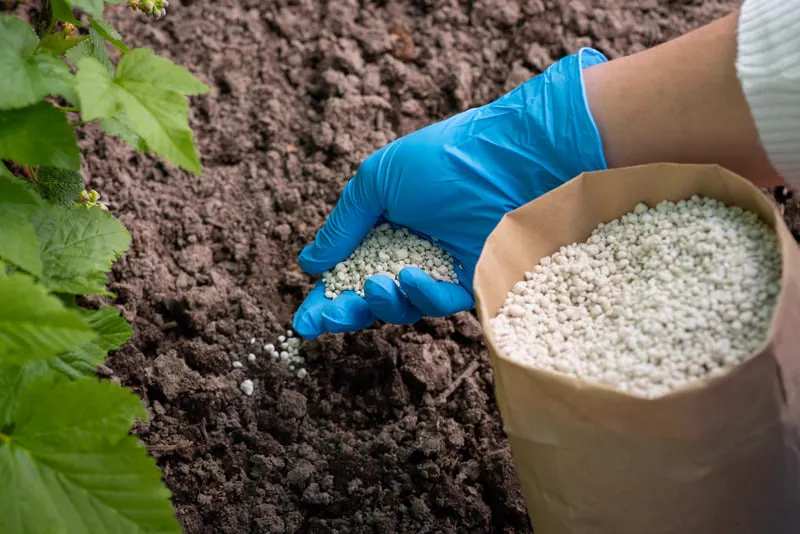
> Warning: The content of this article was generated/supported by AI based on publicly available information. Út Nữ Co., Ltd disclaims responsibility for damages arising from the use of information in this article. You should cross-reference product packaging, manufacturer's instructions, local seasonal calendars, and contact our hotline for advice tailored to your specific conditions.
By mid-November 2026, many fields in the Mekong Delta are entering the main planting window for the 2026–2027 Winter-Spring crop. According to the seasonal schedule guided by the Department of Crop Production and Plant Protection in Official Letter No. 3920/TTTV-TTBVTV, as reported by Nhân Dân Newspaper, early plantings sown from October 10–30, 2026, in coastal, estuarine, and downstream areas are at risk of early salinity intrusion; the main planting window is from November 1–30, 2026, in areas with sufficient water sources; late plantings from December 1–31, 2026, are only to be arranged in upstream and midstream areas with active water control; the entire crop aims to complete sowing before January 10, 2027 (Nhân Dân, 2026).
For households that sowed early from late October, rice is currently two to three weeks old — some areas have already completed the first top-dressing, while others are approaching the second. For households sowing the main crop these days, the immediate task is not to apply a lot of nitrogen, but to follow the correct sequence: apply basal fertilizer before sowing, then conduct the first top-dressing once the rice has rooted. At the same time, the specialized sector notes that the 2026–2027 dry season is likely to experience less rain and more severe saltwater intrusion, with southern Mang Thit (Vinh Long) among the areas requiring close monitoring; only sow when fields and water sources are ready, and follow balanced fertilization guidelines, avoiding excessive application (Nhan Dan, 2026).
The Right Type: base fertilizer first, nitrogen for subsequent applications
The technical process for high-quality, low-emission rice production in the Mekong Delta, published by the National Agricultural Extension Center, outlines the principles of rational and balanced fertilization according to the rice plant's needs at each stage, while also considering the cropping season and soil type (National Agricultural Extension Center, 2025).
For basal fertilization, this guide recommends applying all organic fertilizer, lime, and phosphorus before sowing to create a nutritional foundation for the soil. For highly acidic and alum soils (pH KCl below 4.0), this same document advises reserving approximately 30 percent of the phosphorus for the first top-dressing. The amount of lime (calculated as CaO) specified in this document is 200 to 300 kg per hectare for moderately acidic and neutral soils (pH KCl 4.0–5.0), and 400 to 500 kg per hectare for highly acidic and alum soils (pH KCl below 4.0). Organic fertilizer is recommended at a rate of 1.5 to 3.0 tons per hectare (National Agricultural Extension Center, 2025).
Phosphorus used for basal application can be superphosphate, fused magnesium phosphate, or DAP, depending on soil type and package instructions. This is only an example of fertilizer groups and does not replace reading the ingredients listed on the package and local schedules. Nitrogen (urea or the nitrogen component in NPK fertilizer) is mainly reserved for topdressing applications, as newly sown rice does not absorb much nitrogen; applying nitrogen too early when seeds have just fallen into the field can easily lead to losses.
Timely: basal application before sowing, first top-dressing around 7–10 days after sowing
Following the same procedure, the first top-dressing application is scheduled for 7–10 days after sowing, using approximately 40 percent of the total nitrogen for the crop. The second application (18–22 days after sowing) involves 40 percent nitrogen and 40 percent potassium; the third application (38–42 days after sowing) uses 20 percent nitrogen and 60 percent potassium (National Agricultural Extension Center, 2025). This article focuses only on the first two steps: basal fertilization and the first top-dressing. Subsequent applications require reassessment of leaf color, growth stage, and local schedules before application.
An older technical guide by Assoc. Prof. Dr. Mai Thanh Phung, published on the National Agricultural Extension portal, also set the 7–10 day mark after sowing for the first application, and emphasized a practical point: if the field does not have water on the day of application, do not broadcast fertilizer; foliar fertilizer can be used temporarily, and normal application can resume when water returns (Mai, 2019). This point is still worth remembering at the beginning of the season, when some fields have just been irrigated or the field surface is still uneven.
If farmers broadcast in rows or hills and incorporate fertilizer by machine, the 2025 guidelines recommend using granular fertilizer with a diameter of 2–4 mm, which does not dissolve quickly, applied in two split doses: incorporate 70 to 80 percent of the total amount at sowing, and apply the remaining portion as panicle initiation fertilizer at 38–42 days after sowing; simultaneously, it is advisable to reduce nitrogen by 10 to 15 percent compared to broadcasting without fertilizer incorporation (National Agricultural Extension Center, 2025).
Correct amount: according to soil type, do not apply all at once
The macronutrient quantities for the Winter-Spring crop in the aforementioned process are divided by soil group, calculated per hectare of direct-sown rice (National Agricultural Extension Center, 2025):
- Alluvial soil: 90–100 kg N, 30–40 kg P2O5, and 30–40 kg K2O.
- Slightly acidic soil: 80–100 kg N, 40–50 kg P2O5, and 25–30 kg K2O.
- Moderately acidic soil: 60–80 kg N, 50–60 kg P2O5, and 25–30 kg K2O.
This is the framework for the entire crop cycle, not the amount applied in a single application. For the first top-dressing, approximately 40 percent of the total nitrogen for the entire crop cycle (following the same process mentioned above) will be applied at this time. To convert this to the number of bags, you need to take the content listed on the bag and calculate the kilograms of nutrients, then compare it with the framework above — do not use "one bag per công" as a universal standard for all fields.
Site-specific nutrient management (SSNM) research conducted across eight locations and three cropping seasons from 2016–2018 in the Mekong Delta yielded consistent results: nitrogen rates recommended by the authors ranged from 85 to 95 kg N per hectare on alluvial soils, and from 70 to 80 kg N per hectare on acid sulfate and saline soils; when rice straw was returned to the field, phosphorus and potassium rates were suggested to be approximately 30 to 45 kg P2O5 and 25 to 35 kg K2O per hectare (Ngô et al., 2020). This data serves as a general scientific basis, not as specific experimental results for each product bag at a dealership, and should not be interpreted as a guarantee of results for every individual plot. When there is a slight difference between the research framework and the practical application framework, farmers should prioritize the local seasonal calendar and guidance from local agricultural authorities, then adjust based on leaf color and actual field conditions.
The process also encourages using a leaf color chart to adjust nitrogen application in subsequent rounds (National Agricultural Extension Center, 2025). Early in the season, it's more important not to over-apply at once: excess nitrogen can easily leach or volatilize, making rice plants prone to lush young leaves and susceptible to pests and diseases. Potassium is mainly concentrated in the 2nd and 3rd applications, so the first application does not require a high dose of potassium, unless specific guidelines for gray soil, sandy soil, or raised bed soil recommend supplementation (Mai, 2019).
Tasks for These Days
In summary, for those sowing the main crop, complete the basal application — organic fertilizer, lime if the field is acidic or saline-alkaline, and most of the phosphorus — before sowing. Approximately 7–10 days after sowing, when the rice has rooted and the field has shallow water, apply the first top-dressing, primarily with nitrogen, plus any reserved phosphorus if the soil is saline-alkaline. For those who sowed early, check the sowing date: if it's already 7–10 days, don't miss the top-dressing; if it's already 18–22 days, review for the second application, and do not combine the amounts of two applications into one.
The planting schedule for each field and irrigation sub-zone is specified by local authorities; this article does not replace pest avoidance notices, irrigation schedules, or instructions on fertilizer bags. You should compare with your farm's conditions, consult local agricultural extension officers, and contact your dealer if you need to recalculate quantities based on your specific soil type.
References (Harvard)
Mai, T.P. (2019) *Fertilizing rice in the Mekong Delta*. Available at: https://khuyennongvn.gov.vn/khoa-hoc-cong-nghe/khcn-trong-nuoc/bon-phan-cho-lua-o-dong-bang-song-cuu-long-18450.html (Accessed: 13 November 2026).
Ngô, N.H., Lê, V.D., Trịnh, Q.K., Nguyễn, K.Q., Lý, N.T.X., Trần, V.D., Lâm, V.T., Nguyễn, B.V., Lê, P.T. and Trần, N.H. (2020) ‘Using NPK for rice on major soil types in the Mekong Delta’, *Can Tho University Journal of Science*, 56(Special Issue: Soil Science), pp. 177–184. doi: 10.22144/ctu.jsi.2020.083.
Nhân Dân (2026) *Southeast and Mekong Delta regions: Proactively respond to drought and saltwater intrusion*, 6 November. Available at: https://nhandan.vn/dong-nam-bo-va-dong-bang-song-cuu-long-chu-dong-ung-pho-han-han-xam-nhap-man-post1000699.html (Accessed: 13 November 2026).
National Agricultural Extension Center (2025) *High-quality and low-emission rice cultivation techniques in the Mekong Delta*, 18 November. Available at: https://khuyennongvn.gov.vn/khoa-hoc-cong-nghe/khcn-trong-nuoc/ky-thuat-canh-tac-lua-chat-luong-cao-va-phat-thai-thap-vung-dong-bang-song-cuu-long-31656.html (Accessed: 13 November 2026).
Content & Responsibilities
Content developed by Grokbot AI. Út Nữ Co., Ltd and Grokbot AI disclaim all liability for any damages arising from the use of information in this article. All content is for exploratory and academic purposes only, does not replace professional technical advice, official recommendations from manufacturers or state agencies, and does not constitute a commercial promise regarding yield or economic efficiency.